Against All Odds
The Stories Beneath the Storm

Before we dive in, tap the ❤️ if you ever quit in the middle of a story.
For years, I mourned a boy I had never met.
Eight-year-old Walter Allen was left behind at the Groton Schoolhouse the day of the Children’s Blizzard, or so I believed. That storm—January 15, 1888—took the lives of hundreds of children across the prairie, and Walter’s story haunted me. He was said to have run back into the schoolhouse to retrieve his fancy ink bottle, just as the dray pulled up to carry the students to safety. He was not among them.
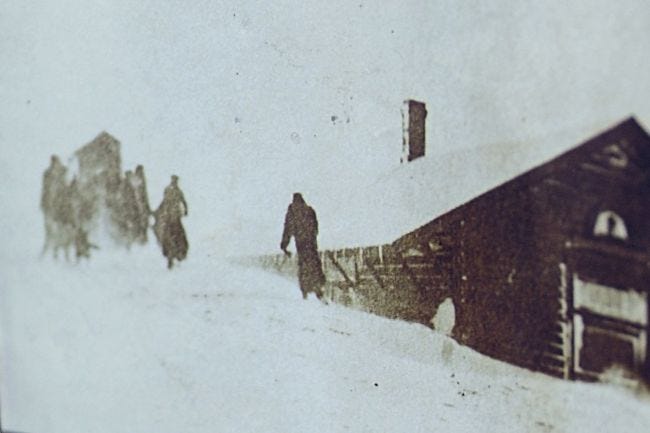
That storm is part of my family’s history, too. My grandmother survived it in a sod house. It is what David Laskin wrote about in The Children’s Blizzard—a “perfect killer storm,” born of a sudden cold front and made fatal by a lack of communication. I remember reading it and feeling an ache inside me I couldn’t explain. I probably projected a great deal of my own trauma onto that story, too—a child’s abandonment.
In my memoir, I wrote:
“How can they not see that he is missing? How could they leave him behind?”
A Different Storm, A Familiar Ache
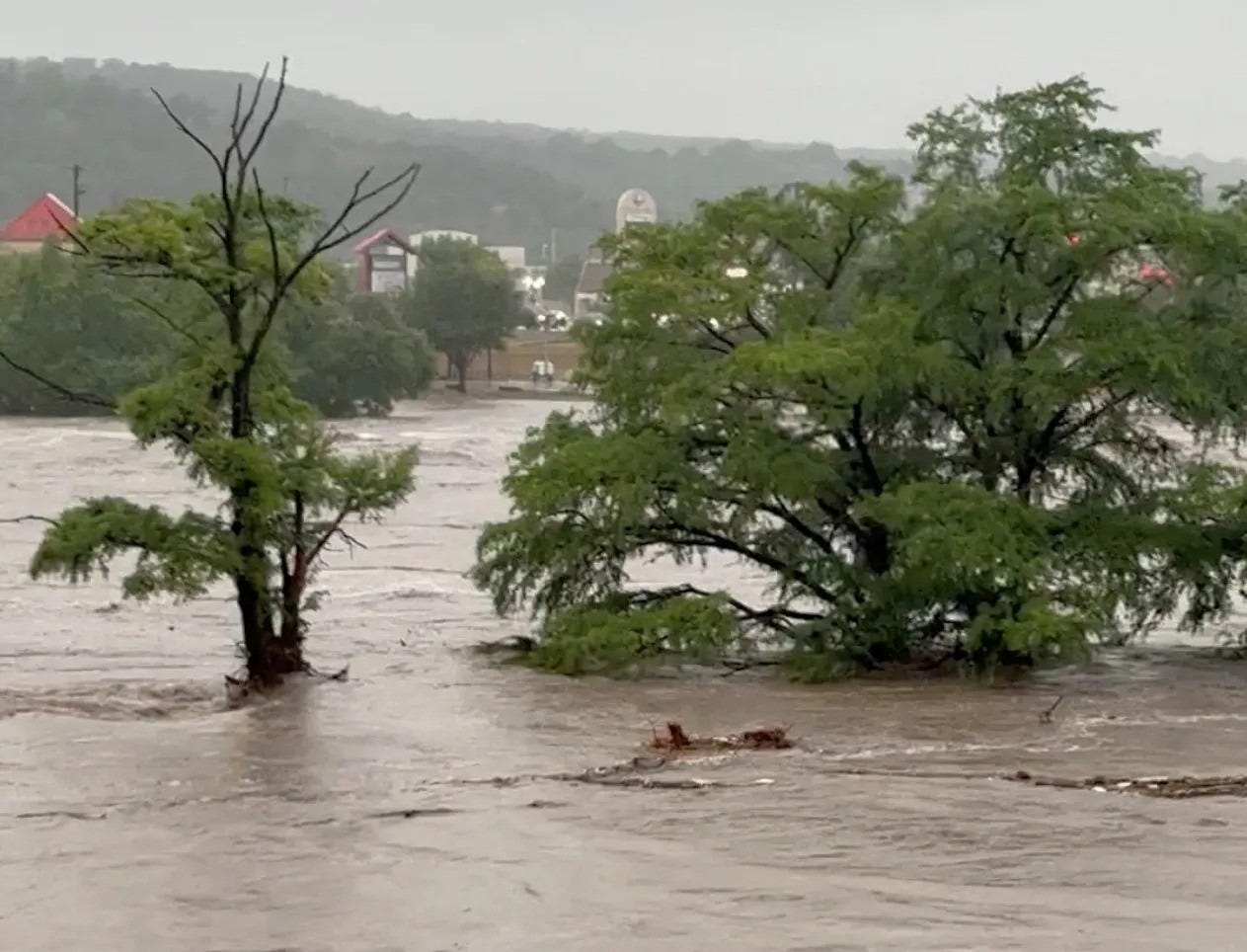
Lately, the news tells us a horrifying story of another perfect storm. Nine-year-old Jamie Hunt, descendant of a Texas oil and gas dynasty, was swept away along with many kids when the waters of the Guadalupe River rose rapidly at Camp Mystic.
The New York Times asked what we’re all asking:
In an age of advanced forecasting and cellphones that can spread emergency alerts quickly and widely, it is difficult to contemplate how so many people were swept away.
It reminded me of the questions asked in 1888. Back then, they also blamed meteorologists for being wrong in the degree of their warnings, and the system changed because of it. But even if they had been right, who would have received the message? Few farmers had access to the telegraph. To want someone to blame is human.
God’s will was one response to the deaths of the victims of the Texas flood. But we also might consider Climate Change’s effects on these super events. The settlers, in 1888, might have believed in Manifest Destiny, God’s will that they were meant to populate the lands of the great prairies as they moved westward. But what part of the story was about the government, the corporations, and an inability of people to see a deeper story?
Here's what happened on those prairies: The extermination of the buffalo. The onset of the railroads. The Native people pushed onto reservations. The sod broken. The grasshoppers. It was, in fact, a harsh land where blizzards can steal the lives of your children.
A Voice I Needed
I recently read one of my favorite Substack writers, Anand Giridharadas, in The Ink, who reflected on the Hunt family—and on all of us. He asked:
It is also we who allow things to happen to us. And part of me wonders if, even hopes, that there might be an awakening from a story that connects cause to effect, upstream to downstream, more clearly that usual in a crisis that has long suffered from nebulousness. Perhaps this family, out of this horror, can help rouse the rest of us to become the great-grandparents our descendants deserve.
And that’s my question, too. How to use our history, our stories, to become better neighbors, better stewards of the earth, better ancestors?
But I Was Wrong About Walter
After four years, I picked up Laskin’s book and saw that I had missed part of the story about Walter, which appeared in a later chapter. Walter Allen’s story didn’t end the way I thought it did.
The men had gone back to the schoolhouse at great peril but found no sign of him. Walter’s eighteen-year-old brother went along too. When the others turned back, fearing for their own lives, the older brother stayed behind. He dropped to the ground and crawled through the growing darkness like a dog, recalling that the old settlers who had a saying: Go to the place below the storm. And by “instinct or dumb luck,” writes the author, he found his brother, barely alive.
And brought him home.
The Stories We Don’t Finish
Is my attachment to this story part of my preference for nonfiction over fiction? I was so overjoyed about Walter that I cried. I suffered Walter’s death because I thought he had perished. How many stories do we walk around with that are only half-finished.
After the Texas flood, Homeland Security head (and South Dakotan) Kristi Noem was attacked for gutting the very government agencies designed to keep people safe—like weather and communications. Our government is still gutting agencies designed to protect us.
Our deeper work is this: To become good ancestors we might reframe our stories, not by glossing them over but by facing the gritty, sad and tragic parts first. Don’t make assumptions. Don’t assign blame. Don’t forget to ask questions. And remember that sometimes you have to crawl.
Join the Conversation
What are the conditions that create a “perfect storm” in your life, your family, or your world? Let me know in the comments. I read every one.
Many thanks to my fellow Substack writers who give me perspective.
Thank you, Anne. I'm also glad that you see my essays as "story." I'm thinking about these things: what is the end point of a story? And how is a story different from an essay?
Thank you for sharing. This is a heartfelt story, especially since your family also experienced the storm first hand. It is also a strong reminder to read until the end of the story. I sometimes find myself making a judgement based on only some of the information. When I listen closer and ask more questions I find that I was mistaken and have to revise "my" story.