On the Bus
What disappears when we stop sharing space

❤️ Tap the heart if you’ve ever taken a ride somewhere and arrived with more questions about people than answers.
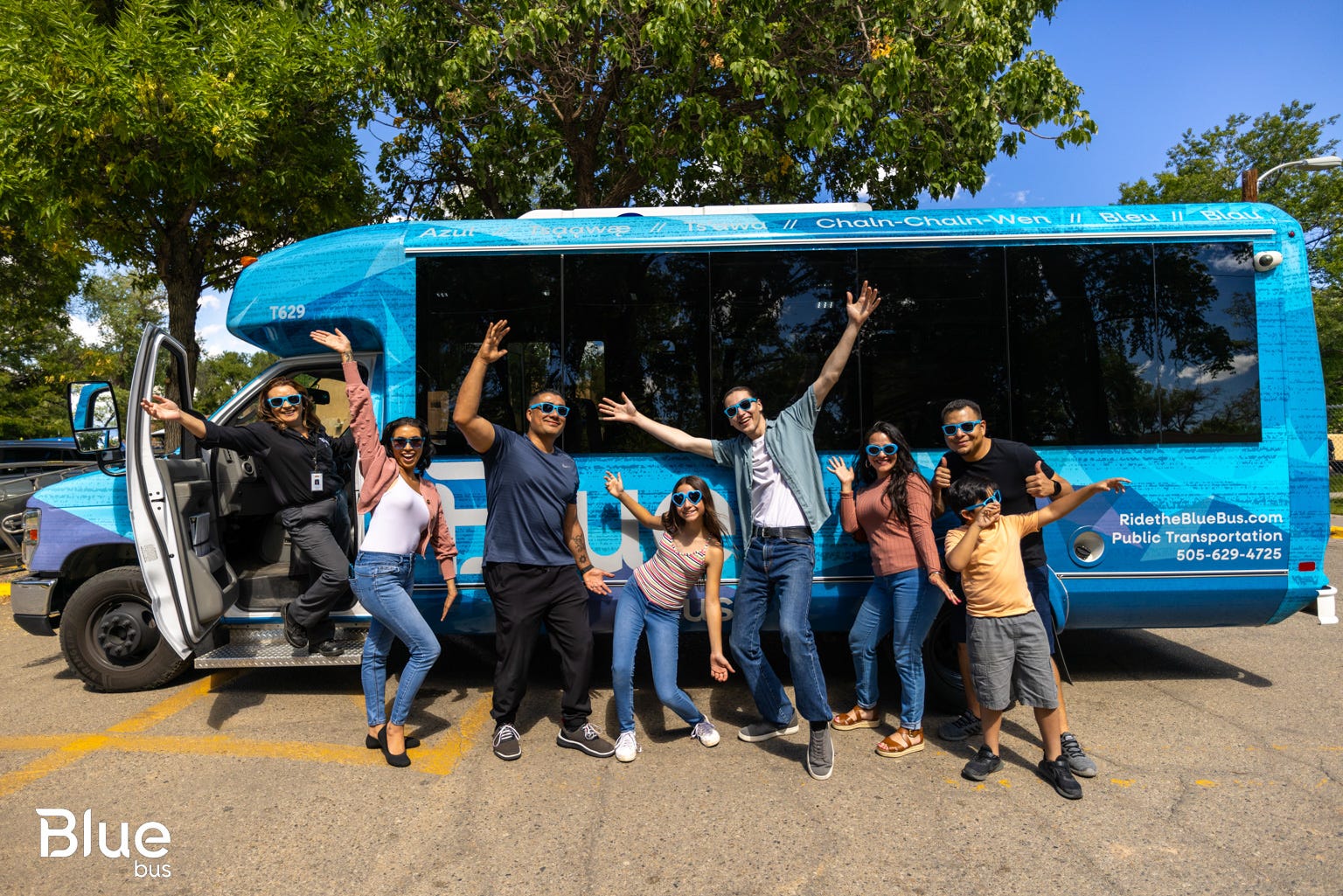
The Santa Fe Blue Bus station. Sunday afternoon. 3:00.
Heading back home to Taos, I sometimes take the free Blue Bus, the Blues Bus? I call it the “Felon Bus” because the first time I rode it, the guy in the back with the torn black jeans said he couldn’t get a job because he was a felon. He said it with a “bitter fame” attitude, the same way Kerouac’s life was described after he published On the Road, written in three weeks on a 20 foot scroll of typewriter paper. The drug fueled saga of the open road became the Great American Novel.
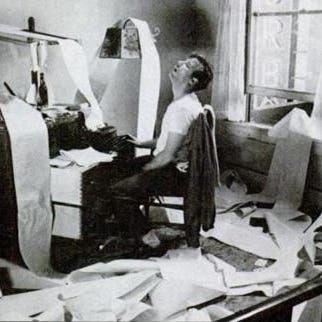
He was one of the Beats, and he had a way of showing us who we were as Americans. But he showed us, too, that we were a patchwork, a crazy quilt of people dragging our shadows and our dreams along with us.
Kerouac didn’t live in New Mexico in 2026, a place where the American Dream was always harder to come by, anyway.
The driver offers the felon encouragement: “You can get a job. Maybe not driving, but there are other jobs. Like cleaning the bus. We have a second chances program.”
Kerouac might have laughed at the bus washing suggestion, taken a swig of whiskey, and hitched another ride, celebrating the freedom of the road.
But at 3:00 on many a Sunday afternoon (my boyfriend lives in Santa Fe) we are pulling out of town, headed through Española, low rider capital of the world, en route to Taos. The driver, who I inwardly call Nurse Ratched, from Kesey’s One Flew Over the Cuckoo’s Nest, is driving, per usual. She is a stickler for rules. She is short, maybe? She’s always sitting, round, and slightly older. Hispanic, I think.
She warns us: No eating on the bus. Epic rebel that I am, I sneak Cheetos, the great American road food, from my Kate Spade handbag, washed down with Diet Coke. She hasn’t caught me yet. Another rule: no foul language.
A youngish, friendly woman sitting almost across from me sits by a quiet Native guy, seemingly her age and size. She announces that they are getting married this week. He offers a quiet smile.
The eight or nine of us on the little bus murmur our congratulations.
“Where will the wedding be?” I ask.
“The Railyard Park,” she says. “It’s going to be so much fun.”
I ask, “What are you going to wear?”
Her fiancé answers: “Ivory.”
I put my nose back in my book, the best of life’s defenses. I’m reading about one of my favorite journalists, Martha Gellhorn, the only woman who landed at D-Day among 150,000 men, even scooping her husband, the writer Ernest Hemingway.
But the bride-to-be interrupts my reading. “You should be with him,” she says, pointing to the guy across from me, who looks like General George Custer, a vain man with long yellow hair.
I should be with this guy because we’re the only blondes on the bus? I’m thinking. We all look alike? It’s maybe not so different from how pink people think brown people sometimes all look alike.
“My husband might not like it,” I say, making a mental note to tell my colorist to correct the yellow undertones.
Back to Martha Gellhorn, stowing away on a Norwegian steamer.
The driver tells the bride-to-be: “You can’t have more than one seat. Put your feet down. This is not a bedroom.”
I glance up momentarily. The casinos with the empty parking lots slide by. I remember them being built, one by one, when I moved to New Mexico thirty years ago and commuted to UNM in Albuquerque for grad school. The Indian casinos did not fit my image of New Mexico.
Bridezilla is angry, insulted that the driver is bossing her around. She also thinks the woman on the other side of her fiancé is picking on her. She tells the Other Woman: “You’re butt ugly. I’m glad I don’t look like you.”
I inadvertently look up to see the Other Woman. She looks stoically silent and determined not to engage. She reminds me of the famous Dorothea Lange Depression era portrait of the woman who might have been beautiful but was too worn and worried to bloom. I always hoped Franklin Roosevelt’s New Deal made her life better, as it raised up so many others by giving them jobs.
The driver amps up her warnings.
Bridezilla now raises the ante with some unrepeatable, seriously creative sexual innuendo, ending with, “I didn’t start this war!”
Nurse Ratched, too, tells Bridezilla she’ll just drop her off on the side of the road. Some miles and strings of profanities go by. We are all wondering who will win the war. I bet on Nurse Ratched.
“You F------ B----,” screams Bridezilla, as if she has rehearsed this.
Did she learn it as a child, words heard from a despairing mother, druggie dad, abusive husband? Is it a trauma she could never name and is doomed to repeat?
I don’t care; I still want her off the bus.
The driver repeats her warnings. Bridezilla shouts that she’ll tear her face off. I see a couple of smiles as Bridezilla links the name of Trump to some sexual perversion.
Then it happens: the Blue Bus pulls over in what looks like the middle of nowhere. Miraculously, Bridezilla gets off without tearing anyone’s face off.
The passengers take a collective breath, as in a yoga class, but without anyone telling us we need to re-ground. Even the would-be groom sits quietly, still on the bus. The odds of that marriage succeeding look slim.
The tall Black man next to me begins to preach forgiveness, or at least, understanding: “She’s not usually like that; she’s nice. Drinking, I guess.”
A couple of the others assent with “hitting the bottle” hand gestures. His preaching is just warming up. He warns us about drinking, about doing what’s right, about accepting Jesus. Something about the Father, Son, and Holy Ghost. A few murmurs of Amen run through the bus.
I give up on reading. I accept that we are all just where we are. Plus, the road grows curvy where it starts to follow the Rio Grande, where the water and new cottonwood leaves glitter hopefully in the sunlight. What would Martha do, I wonder? She befriended people wherever she went: poor kids in postwar Rome, brave people in Helsinki as the war hit. While she couldn’t stop the violence around her, she simply wrote about people.

There’s a notice on the window: “Need a Meal?” It informs passengers where to get off so they can get food, like at the church food pantry. I’ve seen both sides of life here in New Mexico myself: post-divorce, my kids and I were saved by Food Stamps, Medicaid, and free state university tuition. It was a different life then, a hard one. I visit those times in my latest book called Keep a Light On (publishing late 2026).
Maybe this is what buses do: they make us sit next to the country we live in. As the bus follows the river, a line from my favorite Beat writer comes to mind, Gary Snyder: “Ah America, I could almost love you again.”
In Taos, the driver won’t let me stop where my truck is parked. “Nope, it’s not an assigned stop,” she reminds me. I’ll have to walk back a mile. When I get off, bumping my suitcase down the steps at the next bus stop, I say to Nurse Ratched: “Nice job keeping order on your bus today.”
I can’t legitimately call her Nurse Ratched anymore. She’s not passive-aggressive, just doing her job driving the bus. None of us gets to bend the rules; she gets us all where we’re going.
“Thank you,” she says.
I walk back to my pickup, glad to see my home mountain again. I think about how some of my clients here pay $600 for a half-day private ski lesson. I point out the breathtaking view on top of the mountain, where they can see all the way to Colorado. But they don’t see the shadow side, the harder lessons the place dishes out, just as none of us wants to see our shadow side. But they are lessons you must learn about yourself if you want to live here. Or anywhere.
Riding the bus gives me perspective. I’m riding with the country I live in and not just alone in my truck listening to NPR.
I turn on the ignition and drive home. But I can’t stop thinking of the woman left standing on the side of the road, like a small girl with a tirade, finally spent and now alone.
💬 What’s your own Blue Bus story?
A small thank you to the fellow travelers, historians, and witnesses whose work keeps reminding me to look more closely at the country we live in: Chris Arnade George Saunders Robert Reich Ted Gioia Heather Cox Richardson John Ganz and the writers at Talking Travel Writing. This little Blue Bus ride felt like my own small American road story.
I absolutely love your story. It reminds me of lots of bizarre experiences I have had on buses, but none in NM. I am now inspired to ride the Blue Bus to Santa Fe. Do you have a book being published soon?
I love the feeling of connection I have by the end of your ride. Your descriptions of the people made them come alive and I even got a sof spot for the riule keeping driver!